Grouse Medicine- Inner Innocence and Social Conscience
“What’s your favorite color?”
Felipe asks. I drift off into a dreamy place where colors are emotions. They are relevant, urgent and intelligent information. Washed with a warm feeling, I confidently share: “You know when you are in the forest and sunlight comes through the trees in rays? And if you tilt your head one way, you can see a rainbow of colors moving as tiny particles. When you tilt your head again, it’s gone. That’s my favorite color.”
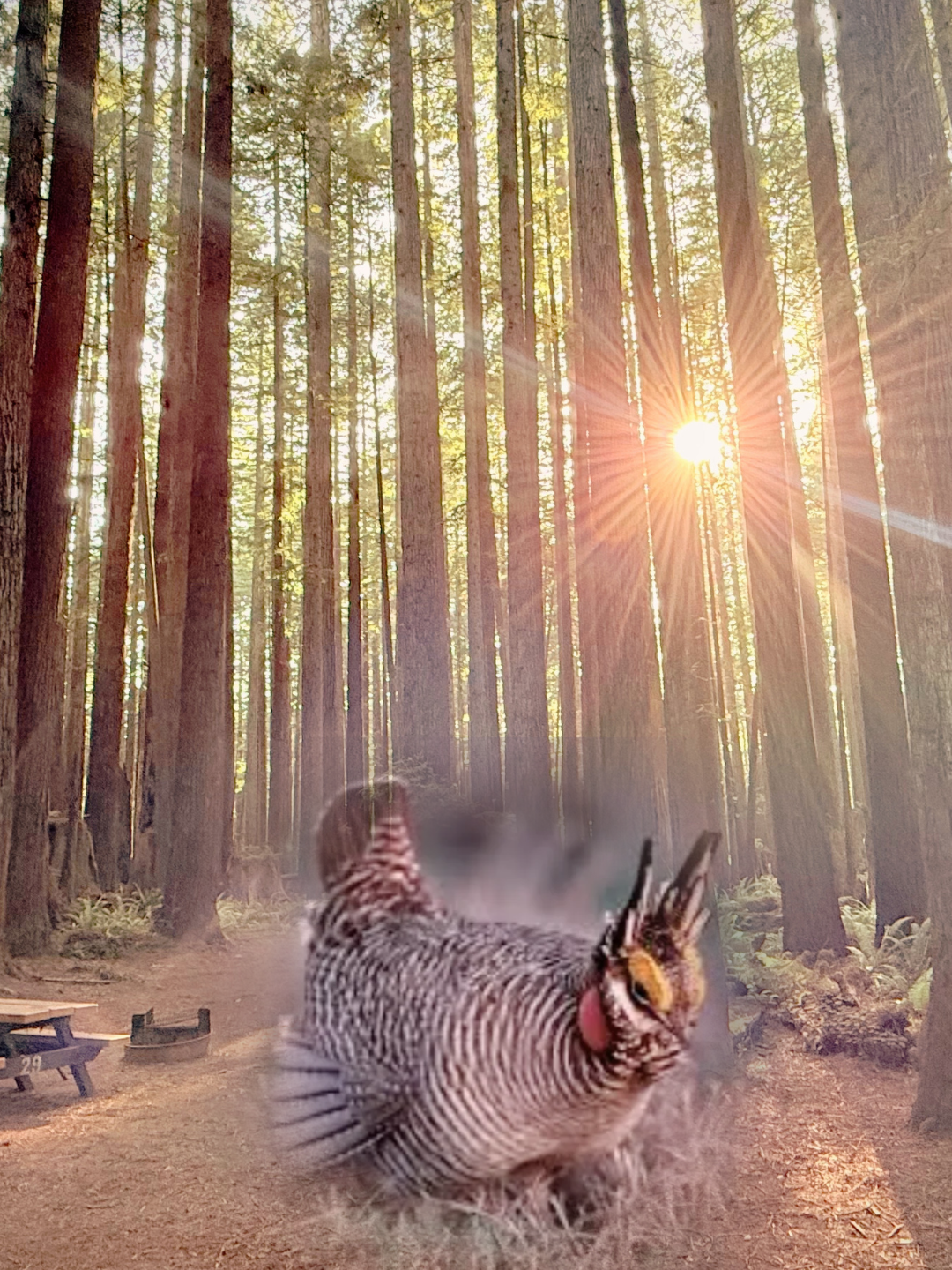
The last 6 weeks have felt like that color. Intuition has been instantly accessible and premonitions precede meaningful events. When I tilt my head another way, it’s gone. Almost like a warm apparition is walking beside me. I can feel it, but most can't see it. Is this what animism feels like? Is this what the project of colonization forced us to forget?
I have felt simultaneously well companioned and deeply lonely. It’s as if the animate world has taken me and I miss my muggle family.
I walked a spiraling path intentionally to this place, this still lonely eye of the storm. I took my inner child and my inner protective feminine with me. A frightening grandmother figure made of corn husks and rabbit bone represents my protective feminine. A soft tattered Raggedy Ann doll who is missing an eye represents my inner child.
There has never been a harder time to be a ten-year-old girl in this country. And all women still have a part of them that sees through the heart of their inner ten year old girl.
It’s not the hardest time to be ten and a girl because girlhood has suddenly become more fragile — girls have always been subject to the slow training that teaches them to make themselves smaller, quieter, more palatable, which also makes them more vulnerable to exploitation and abuse. But because the cultural broadcast has grown louder, less escapable and less apologetic.
We live in a moment where the highest elected office in this country is held by a man with decades of documented sexual misconduct. César Chávez — labor icon, classroom hero — has been accused by his own co-founder Dolores Huerta, of grooming and sexually abusing girls as young as twelve. A website drawing 62 million visitors a month was just this week shut down for hosting tens of thousands of videos of drug-facilitated rape, with "teen" as its most searched tag. The legal architecture that once offered girls at least the symbol of bodily protection has been dismantled — Roe overturned, miscarriage criminalized in some states, and a bill now moving through Congress that could strip 69 million married women of their ability to vote.
And every girl between eight and fifteen who is trying to answer the most urgent developmental question of her young life — who am I, really? — is doing that work inside an overculture that keeps answering for her:
you are unprotected, you are contested, and what you feel doesn't matter much.
So when three girls arrived at this farm having turned their pain inward — having done to their own bodies what the culture has been doing to girls for centuries — I was not surprised. I was heartbroken, I was still, I was ready.
I know what the land here can hold.
I know what it means to be recognized by something that asks nothing from you in return. And I know, from my own body, that there is an ancient intelligence alive in soil and spiral and story that has been waiting a long time to be offered back to girls who have been taught to forget it.
Over the course of our sessions together, we moved slowly and intentionally as if basking in my favorite color. We felt our way through with our senses. We listened to plants and used metaphor to talk about emotions the way you'd talk about weather — just part of the beautiful landscape, not something to be ashamed of, just the weather today. We talked about the parts of ourselves that feel scary or hard to hold, always with a plant ally or a symbolic ancestor attending. We did small acts of bravery and rites of passage: jumping over a stick, passing through a doorway, standing on the driveway where a neighbor's house had burned — facing the childhood fear and unknown of the Almeda fire when these girls were only five years old — and learning to shake that old fear all the way out through our bodies, from the soles of our feet to the tops of our heads and ridiculously waggling our hips.
We made dolls.
First the creepy dolls: soft fabric figures that the girls dismantled, disembodied, smeared with dirt and paint, marked with the colors of emotions we'd named together. These were vessels for everything uncomfortable — the disowned feelings, the hard parts, the things they didn't yet have words for. Then we put the “parts” in the center of a yarn web woven between the hearts of adults and the young girls. Each strand represented our wounds united flowing in and out of one another’s hearts and through our hands, weaving a giant web of belonging. Then we breathed together and lifted the web, cradled and rocked the “parts” together.
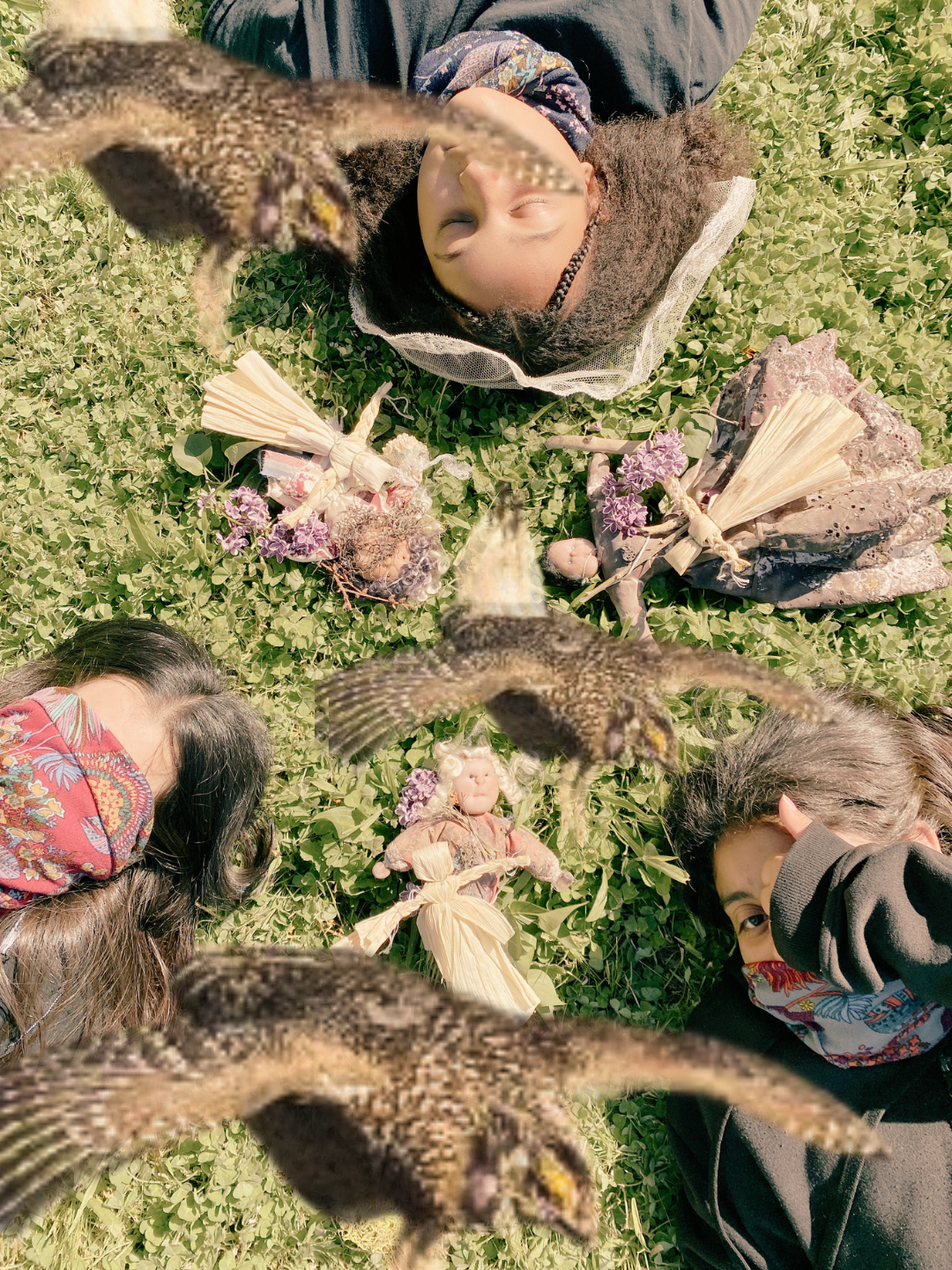
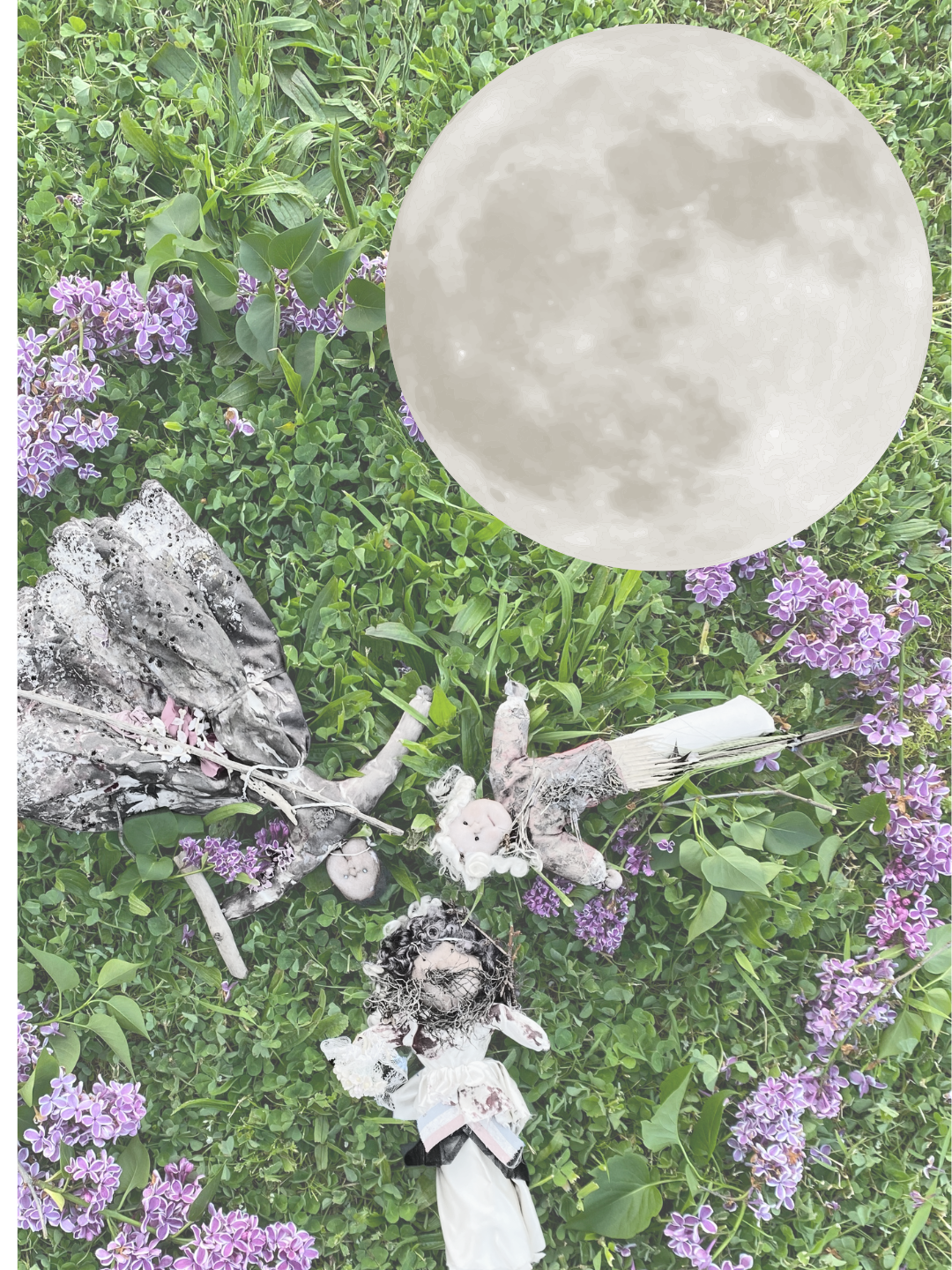
That night, we left the creepy dolls on the lawn to bathe in moonlight, ringed in a circle of lilacs.
The next morning, I went out to collect them.
When the girls were away the dolls were given structure, assembled. This remained a mystery, entertaining the still whimsical nature of an innocent girl. Did her ancestor assemble it when she left it in the moonlight? A fairy? Could it have been that grandmother they met in the cave in the guided visualization? The one that smelled of sea water and had barnacles on her knees?
Then came the spiral.
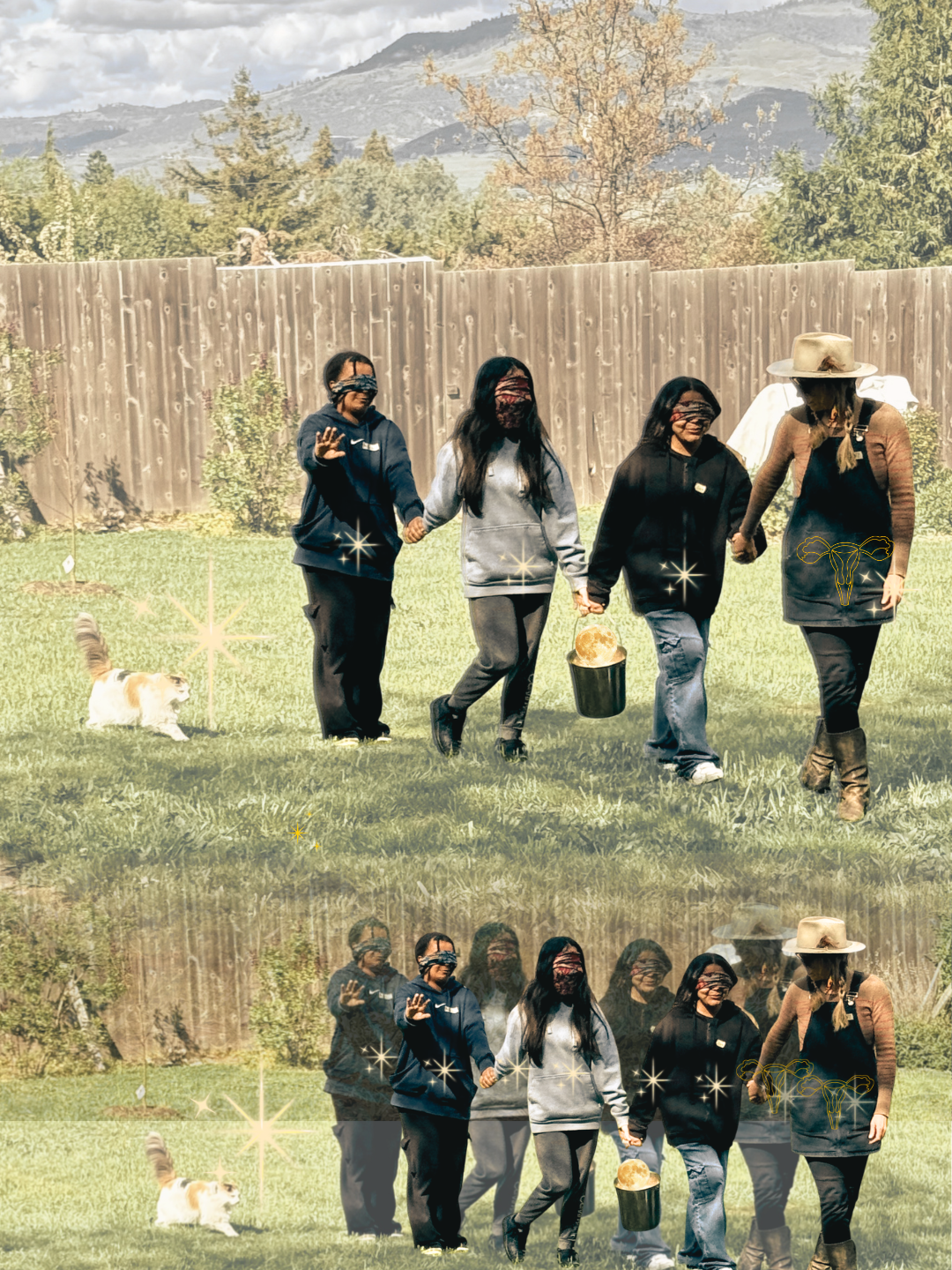
Blindfolded, each girl holding the hand of an ancestor she imagined walking beside her, they moved toward the center. We placed the creepy dolls there, in that still point. And in the center, waiting for them, were the bases of their sacred dolls — made of corn husks, smelling of earth and ceremony. Eyes open now, they spiraled back outward, carrying these new forms with them, imagining with each step the wishes their ancestors know they are capable of living.
That's when she came. Aggressively.
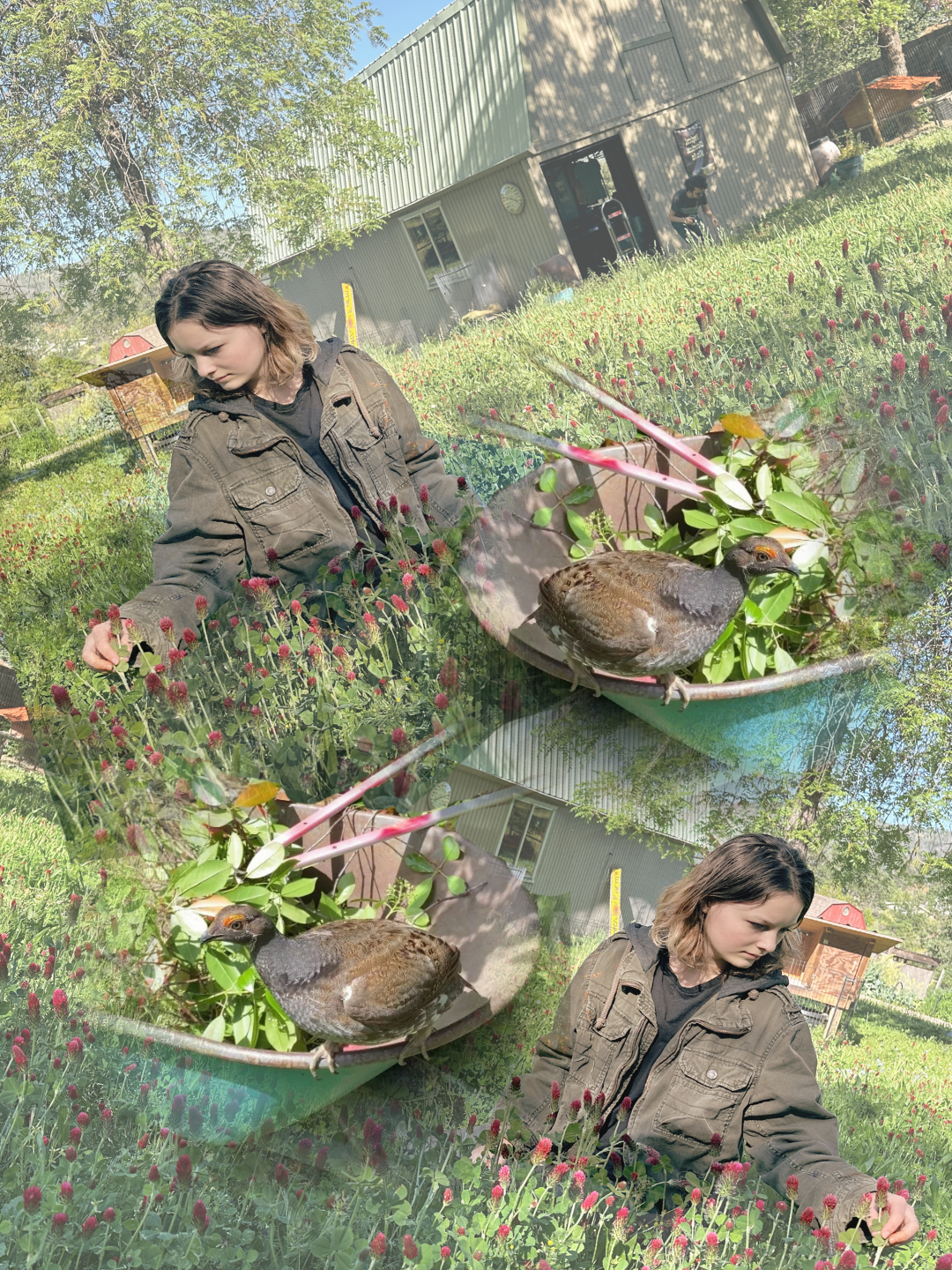
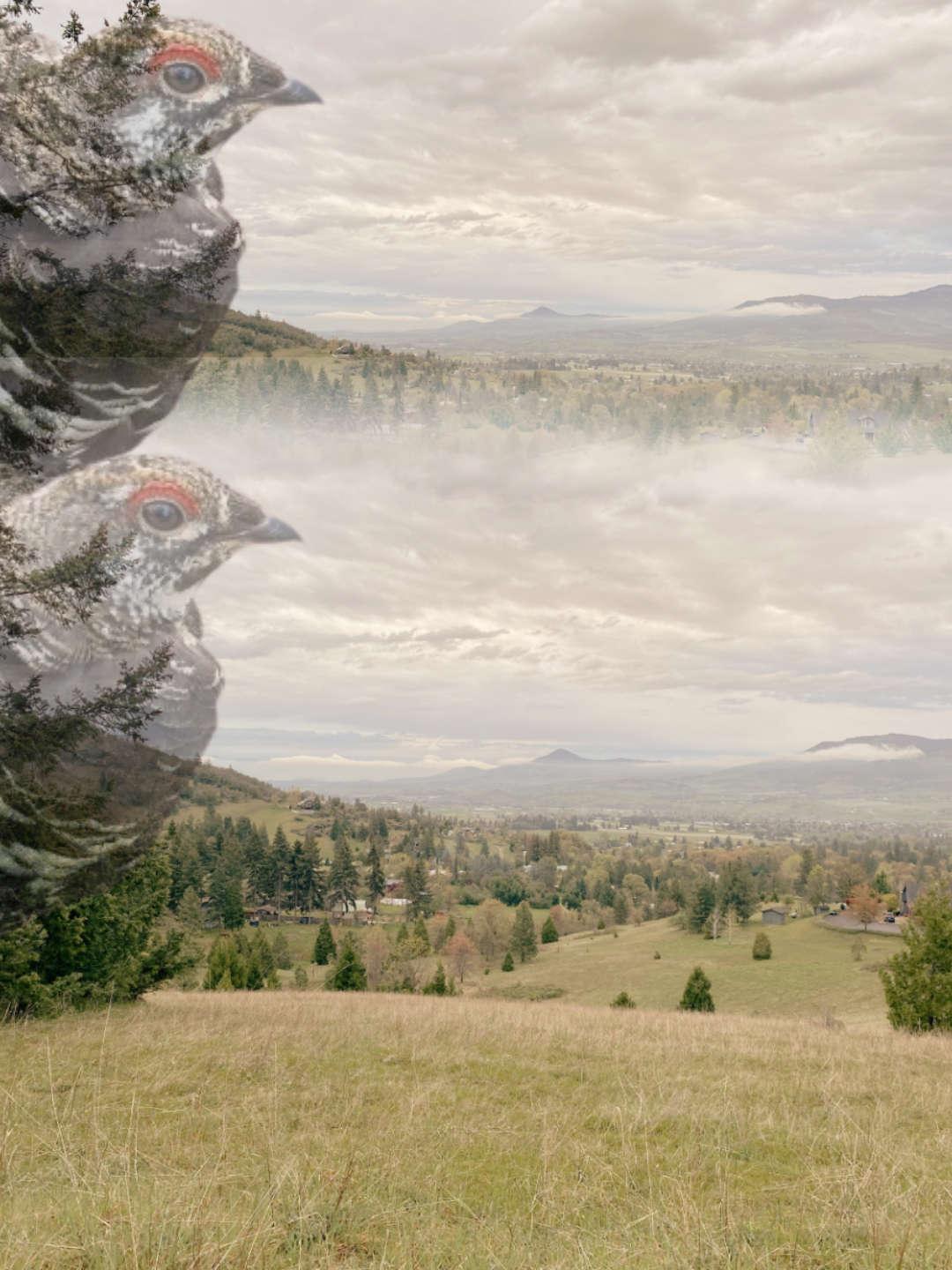
I had loaded my wheelbarrow and was heading toward the hedge line when I heard it — wingbeats like something much larger than the bird that landed at my feet. A grouse. She was bold and utterly unafraid, following me down the path with an energy I can only describe as purposeful.
I thought maybe she wanted in with the chickens — I'd just scattered corn. But when I moved toward the gate, she blocked my path. Then flew up onto the wheelbarrow and looked at me.
I watched her disappear over the barn roof and went back to my work.
Ten minutes later, she flew down from the peak of my house, landed on the edge of the wheelbarrow, and looked directly at me. I mean directly. The kind of eye contact that makes you put down your tools.
Then she flew straight at my head and snapped a few strands of my hair in her beak. Then over the roof of the house she went.
She came back two days later. Landed on the fence post of my kitty house, two feet from where I stood, her wingbeats thunderous as a turkey, intimidating. She was, I think, making a point. The least of which is that she is here.
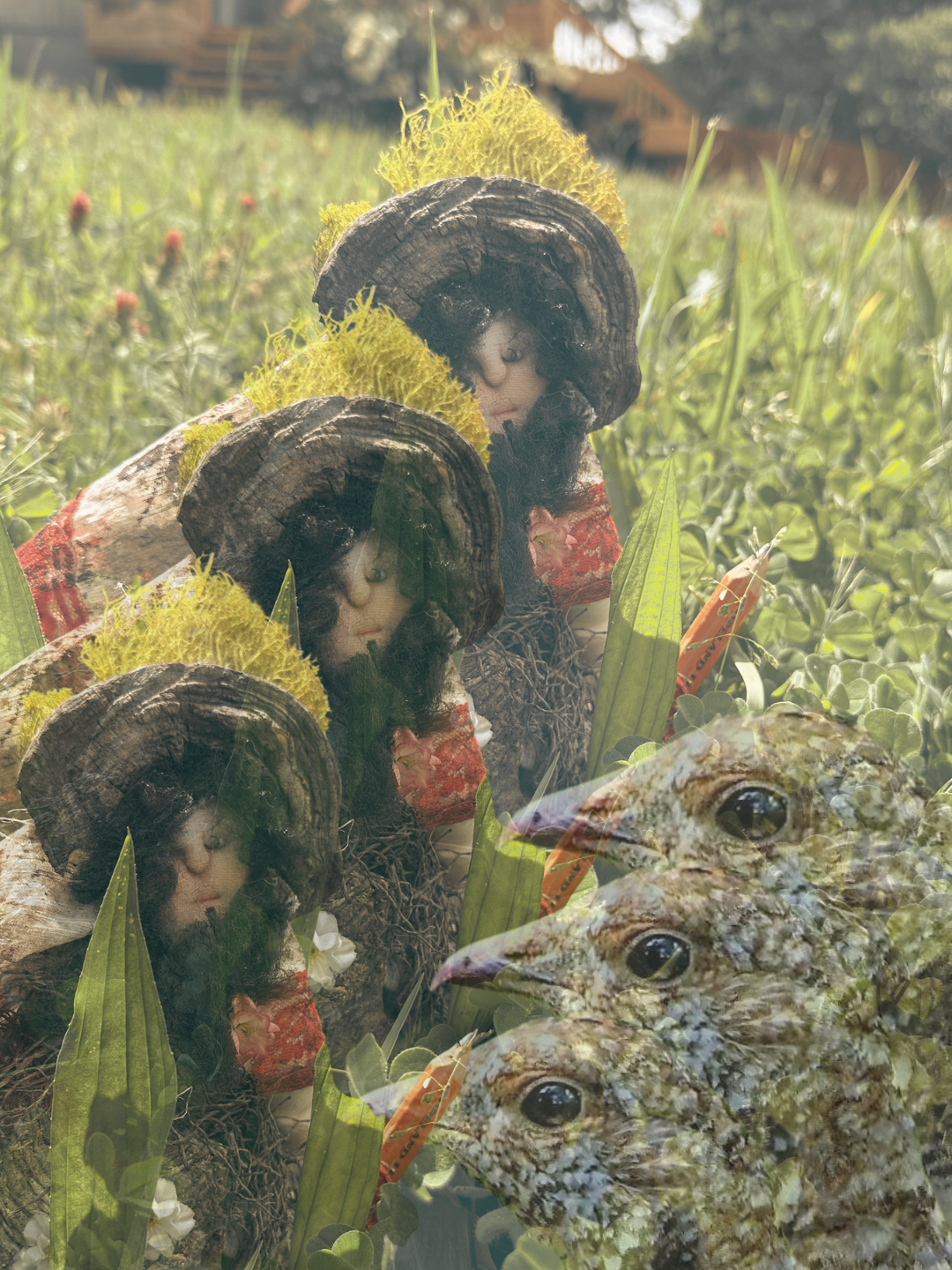
I went looking for what grouse medicine means — and found this:
Grouse is the totem that protects the inner child. She holds your social conscience, reminding you that through humility and judiciously granted trust, an inner innocence can be maintained. She does not reveal herself to the predator unnecessarily. Only if the predator is close and putting her brood at risk does she fluster and flutter into view — hopefully drawing the danger away from her chicks.
And this:
One of the oldest known symbols of personal power is the Sacred Spiral. Grouse medicine can be imagined like a whirlpool or a tornado, taking one to the center. As the spiral spins tighter and tighter, it shrinks down to a point of nothingness — and that great spiral is played out in the dance of the grouse, and repeated in the movement of the stars.
I sat with that for a long time.
Here I was, the morning after placing creepy dolls at the center of a spiral with three ten-year-old girls who had been hurting themselves — and a mother grouse, protector of the brood, keeper of the sacred spiral, came and pulled my hair. She may have even taken a few strands for her nest.
I don't know how else to say it: I felt seen by something older than language.
The last week of our group, I reached out to ten women friends and asked them to respond to a single prompt:
Knowing what you know now — what would you say to yourself at ten years old?
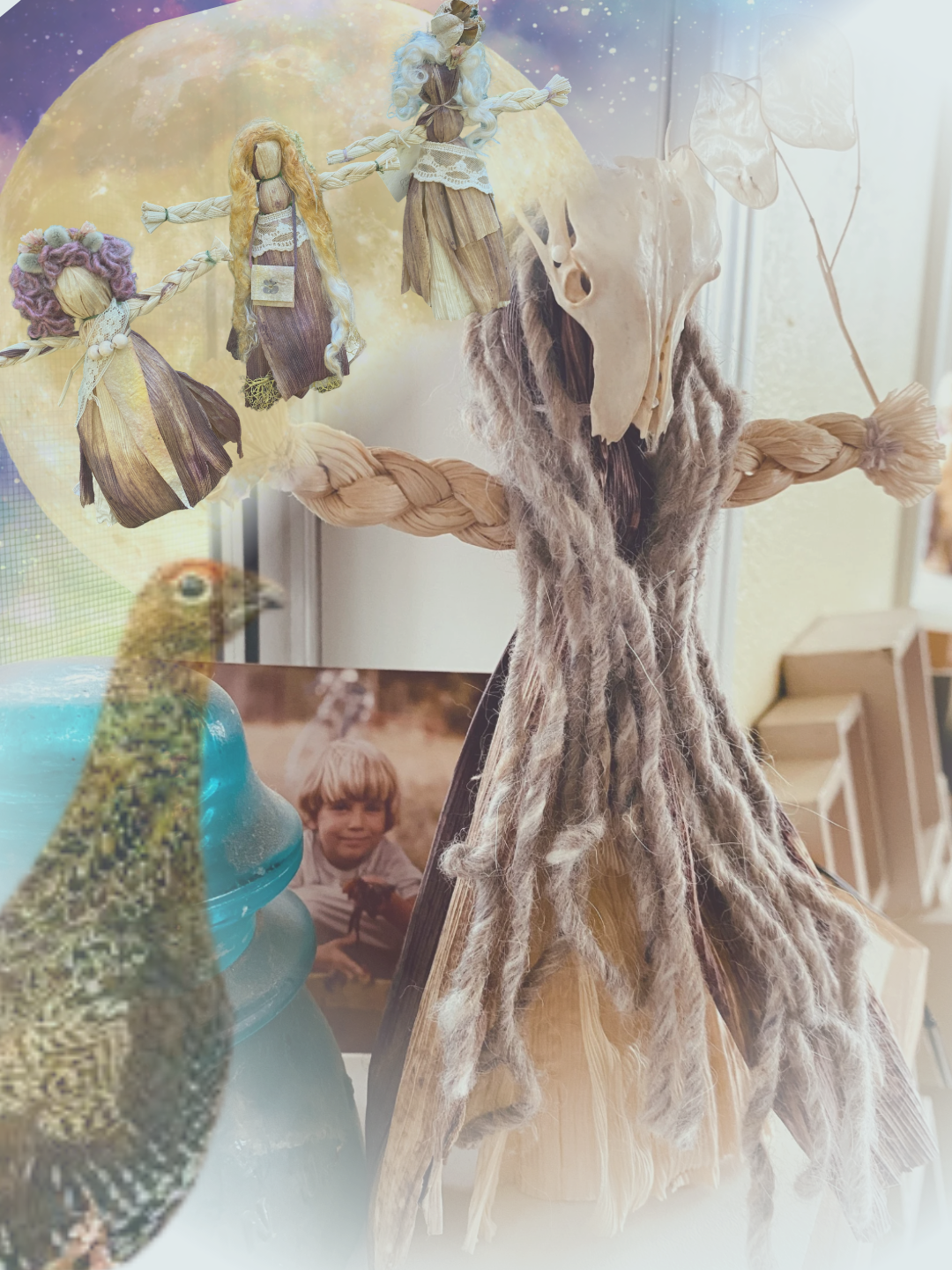
The messages that came back were extraordinary. Women writing to the tender, unprotected parts of themselves across decades. Each one a thread of grief and hard-won grace. I printed them in tiny letters on fine paper and rolled them into scrolls, which the sacred dolls now hold in their finished hands.
The girls were delighted to try to read them. They squinted and leaned in close and managed it better than I expected. I think there's a metaphor in there — about the patience it takes to receive the wisdom of the ages, and how young eyes can sometimes see what we've stopped trying to look for.
This is the work I believe the land is here for.
Not to fix these girls — they are not broken. But to offer them something that is very hard to find right now: a place that holds their whole selves, including the parts they've been taught to hide. A web strong enough to carry all of it. A spiral that leads somewhere real.
The grouse knows.
She came to pull my hair and I am grateful.
Sunny Joy Farm is a care farm in Southern Oregon offering therapeutic youth programming, botanical arts, and land-based healing. If this work resonates with you and you'd like to support it, you can learn more on the about page